Blog · Coastal
What causes sliding door track corrosion in Florida?
Aluminum tracks aren't supposed to rot. In coastal Florida, they do — and here's the chemistry of why.
Published Aug 25, 2026 · Updated Aug 25, 2026 · ~5 min read
Short answer: Coastal sliding door tracks corrode from a combination of salt air, constant humidity, standing water in the channel, and abrasive sand that strips protective surfaces. Together they pit and degrade the aluminum far faster than in dry, inland climates.
The four forces at work
- Salt air is corrosive and settles on every surface near the coast.
- Humidity keeps the track damp, feeding corrosion year-round.
- Standing water in a track with blocked weep holes sits and eats the metal.
- Sand abrades the protective surface, exposing fresh aluminum to attack.
What corrosion looks like
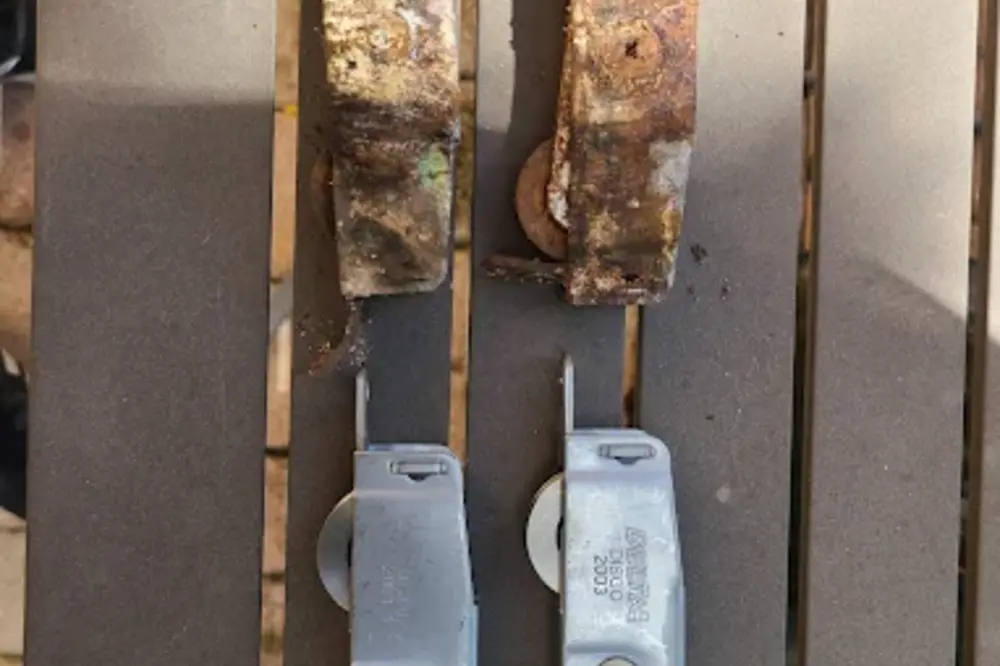
White chalky deposits, pitting, rough or flaking surfaces, and eventually holes. A corroded track can't give rollers a smooth ride, so the door grinds and the new rollers you just fitted wear out fast.
How to slow it down
- Clean the track regularly to remove salt and sand.
- Keep the weep holes clear so water drains instead of pooling.
- Use a dry lubricant, not grease.
- Fit a stainless track cap, which resists corrosion, when the surface starts to go.
When it's too late to prevent
Once the track is pitted or corroded through, cleaning won't restore it — it needs a cap or replacement. Catching it early keeps the fix small.
FAQs
Questions homeowners ask first.
If it's surface pitting, a stainless cap covers it. Tracks corroded through must be replaced.
Yes — blocked weep holes let water pool in the track, which dramatically speeds corrosion.
Keep it clean, keep it draining, use dry lubricant, and consider a stainless cap for extra protection.